

Quick Summary
The most effective customer retention strategies for small businesses focus on delivering a good customer experience, staying connected after the sale, understanding customer needs, and giving customers clear reasons to return. Retaining existing customers can help small businesses build repeat sales, improve customer lifetime value, and create more predictable revenue without depending entirely on acquiring new customers.
Introduction
Getting a new customer is important. But Keeping that customer can be even more valuable.
Many small businesses spend most of their marketing effort trying to find new customers. They run advertisements, create social media posts, improve their websites, and look for new leads.
But there is another opportunity that is often overlooked. The customers who have already bought from you.
These customers already know your business. They have experienced your product or service. If that experience was positive, they may be more willing to buy again.
This does not mean every customer will return. Customer retention needs to be earned.
Small businesses need to understand what customers value, deliver consistently, communicate at the right time, and make it easy for customers to continue doing business with them.
In this article, we look at 7 customer retention strategies for small businesses that can help increase repeat sales and build more sustainable growth.
Why Customer Retention Strategies Matters for Small Businesses
Business growth is often discussed in terms of acquiring new customers. But growth can also come from getting more value from the customers you already have.
A customer who buys from you repeatedly can generate more revenue over time. They may also recommend your business to friends, colleagues, or other potential customers.
Retention can therefore support growth in several ways:
- More repeat purchases
- Stronger customer relationships
- Greater customer lifetime value
- More referrals
- Less dependence on constantly finding new customers
- More predictable revenue
This is particularly important for small businesses because marketing budgets and resources are often limited. You do not necessarily need thousands of new customers. Sometimes, improving the experience for the customers you already have can create meaningful growth.
1. Understand Why Customers Choose Your Business
Customer retention starts with understanding your customers. It is difficult to retain customers if you do not know why they bought from you in the first place.
Your customers may choose your business because of:
- Product quality
- Price
- Convenience
- Expertise
- Service
- Speed
- Personal attention
- Trust
- A specific problem you solve
The reason may not always be what you think.
Ask Customers Simple Questions
You do not need a complicated research project. Ask customers questions such as:
- What made you choose us?
- What did you like most about your experience?
- Was there anything we could have done better?
- What would make you buy from us again?
- What other problems could we help you solve?
These conversations can reveal useful insights.
Look for Patterns
One customer comment may be interesting. Repeated comments are more important. If several customers mention the same problem, it deserves attention.
If customers repeatedly praise the same part of your service, that may be one of your strongest competitive advantages. Customer feedback can therefore help you improve both retention and your overall business strategy.
2. Make the Customer Experience Consistently Good
A customer may forgive one small mistake. Repeated problems are different.
Retention depends heavily on consistency. Customers want to know what they can expect when they deal with your business.
That means delivering a consistent experience across:
- Sales
- Communication
- Product or service delivery
- Billing
- Customer support
- After-sales service
Do Not Promise More Than You Can Deliver
One of the easiest ways to lose trust is to create expectations that your business cannot meet.
If you promise a response within one hour, respond within one hour. If delivery takes five days, do not promise two. If a service includes three meetings, make sure the customer knows what happens during those meetings.
Clear expectations create confidence.
Fix Problems Quickly
Mistakes happen in every business. The real test is what happens next.
When something goes wrong:
- Acknowledge the problem.
- Explain what happened clearly.
- Offer a practical solution.
- Follow up afterwards.
A well-handled problem can sometimes strengthen a customer relationship because it shows that the business takes responsibility.
3. Stay Connected After the Sale
One of the biggest mistakes small businesses make is disappearing after receiving payment.
The customer completes the purchase. The business moves on to the next prospect. That is a missed opportunity.
The period after a sale can be one of the best times to strengthen the relationship.
Create a Simple Follow-Up Process
Your follow-up does not need to be complicated.
Depending on your business, you could:
- Check whether the customer is satisfied.
- Ask whether they need help.
- Share useful information.
- Remind them about future purchases.
- Tell them about relevant services.
- Ask for feedback.
The objective is not to constantly sell. It is to remain useful.
Make Follow-Up Personal
A generic message sent to everyone may feel like advertising. A relevant message feels different.
For example:
How is the new system working for your team? If you have any questions, I’d be happy to help.
That small difference can make communication feel much more human.
4. Give Customers a Reason to Come Back
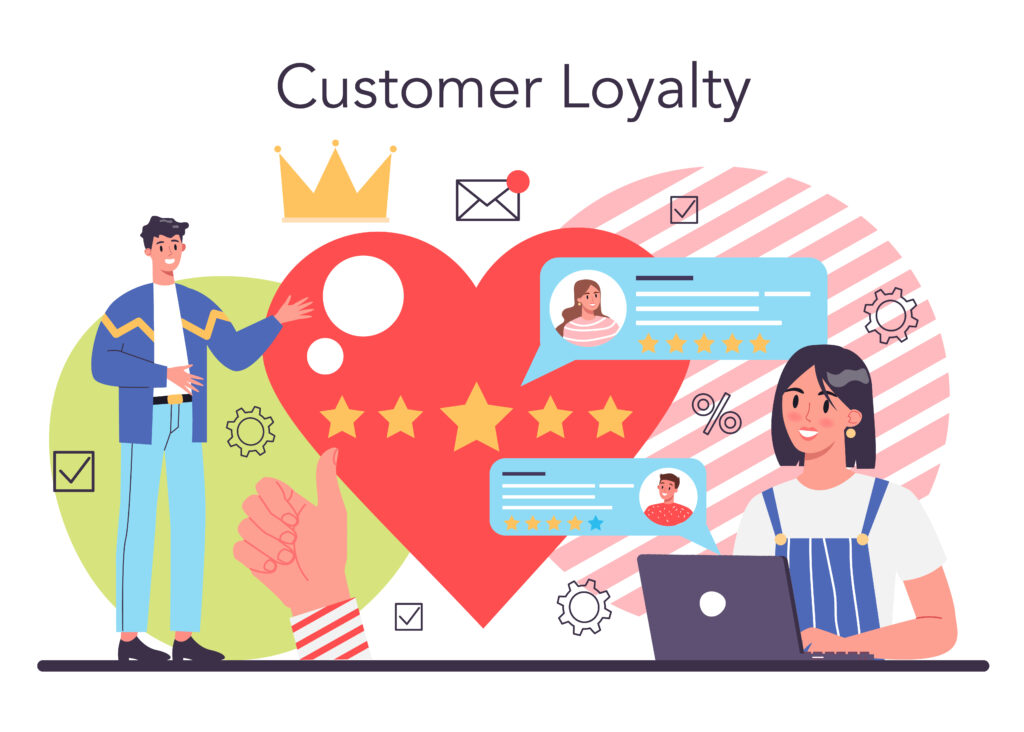
Customers need a reason to make another purchase. Sometimes the reason is simple. They need the product again.
But in other businesses, the next purchase needs to be created through value and communication.
Create Relevant Repeat-Purchase Opportunities
Depending on your business, you could offer:
- Maintenance services
- Replenishment reminders
- Upgrades
- Related products
- Additional services
- Seasonal offers
- New solutions
The key word is relevant.
Do not contact customers simply because you want another sale. Contact them when you have something that can genuinely help them.
Make the Next Purchase Easy
If customers have to repeat the entire buying process every time, friction can reduce repeat sales.
Make it easy to:
- Reorder
- Book again
- Renew
- Upgrade
- Contact you
Convenience is an important part of retention.
5. Personalize Your Customer Communication
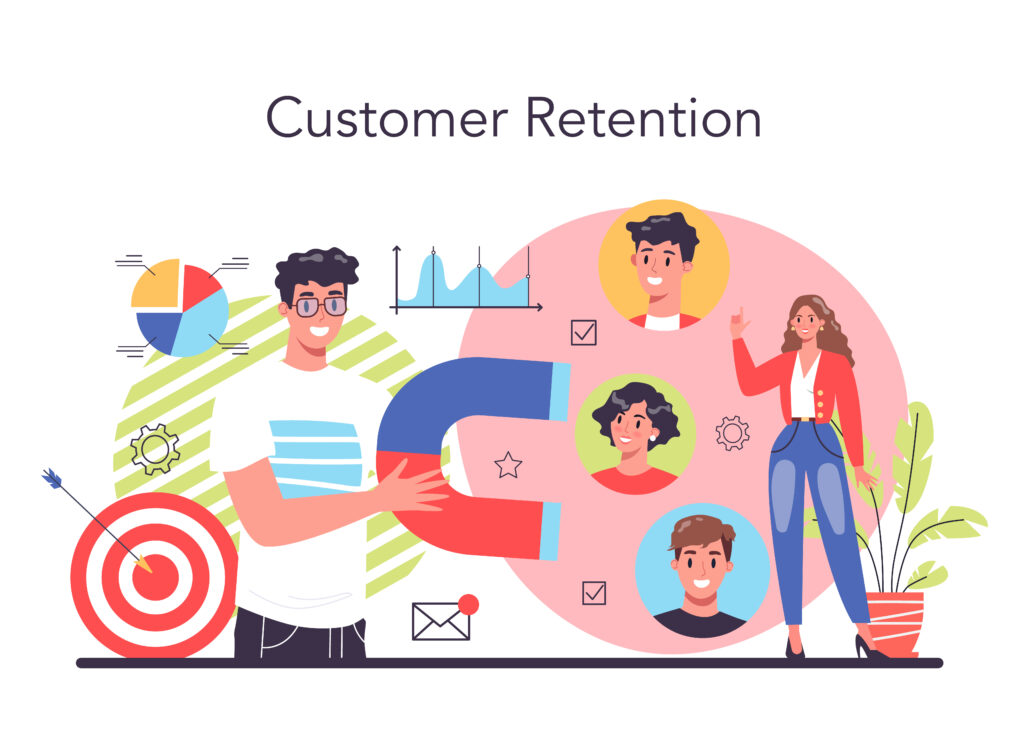
Customers do not want to feel like another number in a database. Even small businesses can personalize communication without expensive technology.
You can use information such as:
- Previous purchases
- Customer interests
- Service history
- Important dates
- Previous conversations
Segment Your Customers
You do not need dozens of customer segments.
Start with a few useful groups.
For example:
- New customers
- Repeat customers
- High-value customers
- Customers who have not purchased recently
Each group may need a different message.
A new customer may need onboarding information.
A repeat customer may appreciate a loyalty benefit.
A customer who has not purchased for a long time may need a useful reminder or a reason to return.
Personalization becomes much easier when you understand these differences.
6. Build a Simple Customer Loyalty Strategy
Loyalty does not always mean creating a complicated points program. Small businesses can build loyalty in many ways.
Recognize Repeat Customers
Simple recognition can have a powerful effect.
You might offer:
- Early access to new products
- Special offers
- Priority service
- Exclusive content
- Referral benefits
- Loyalty discounts
But do not assume discounts are the only way to create loyalty.
Create Value Beyond Discounts
Constant discounts can train customers to wait for a lower price. Instead, think about how you can provide additional value.
For example:
A consultant might provide useful resources.
A professional service provider might offer priority support.
A retailer might provide early access to new products.
A service business might offer a simple loyalty benefit after a certain number of purchases.
The best loyalty strategies strengthen the relationship rather than simply reducing the price.
7. Measure Customer Retention
You cannot improve what you do not measure. Customer retention should therefore become part of your regular business review.
You do not need a complicated dashboard. Start with a few important numbers.
Customer Retention Rate
This tells you what percentage of customers you retain over a particular period.
Repeat Purchase Rate
This tells you how many customers buy from you more than once.
Customer Lifetime Value
This estimates the value a customer can generate during their relationship with your business.
Churn Rate
This measures the percentage of customers who stop buying or using your service during a given period. These numbers can reveal whether your retention efforts are actually working.
For a broader look at the numbers that matter in marketing and growth, see our guide to marketing metrics every small business owner should track.
Customer Retention Is Not Just a Marketing Activity
It is tempting to think of retention as another marketing campaign. It is much bigger than that. Retention is influenced by almost every part of your business.
Your marketing creates expectations.
Your sales process creates confidence.
Your product or service delivers the promised value.
Your customer service determines how problems are handled.
Your follow-up keeps the relationship active.
This means customer retention should be viewed as a business-wide responsibility.
How Customer Retention Fits Into Your Growth Strategy
Customer retention works best when it is part of a broader growth system.
A business needs to attract potential customers.
It then needs to convert those prospects into customers.
After that, it needs to create enough value for customers to return.
The cycle looks like this:
Attract → Convert → Deliver Value → Retain → Repeat → Refer
This is why retention is an important part of broader small business growth strategies for entrepreneurs.
When lead generation, conversion, retention, and measurement work together, growth becomes more structured.
Common Customer Retention Mistakes Small Businesses Should Avoid
Only Contacting Customers When You Want to Sell
If every email or phone call is a sales pitch, customers may stop paying attention.
Stay useful between purchases.
Ignoring Customer Complaints
A complaint is also feedback.
Ignoring it can turn a small problem into a lost customer.
Giving Every Customer the Same Message
Different customers have different needs.
Even basic segmentation can make communication more relevant.
Focusing Only on Discounts
Discounts may encourage purchases, but they do not necessarily create loyalty.
Focus on value, service, convenience, and trust as well.
Not Tracking Retention
Without measurement, you may not know whether customers are actually returning.
Track a few meaningful numbers consistently.
How to Build a Customer Retention System for a Small Business
You do not need sophisticated software to start.
A simple process can look like this:
Step 1: Record Customer Information
Maintain basic information about customers, purchases, services, and communication.
Step 2: Define Follow-Up Points
Decide when you will contact customers after a purchase.
Step 3: Create Useful Communication
Prepare a few messages that help customers get more value from their purchase.
Step 4: Identify Repeat-Purchase Opportunities
Understand when customers may need another product, service, renewal, or upgrade.
Step 5: Track Retention
Review repeat purchases, retention rate, and customer lifetime value regularly.
Step 6: Improve the System
Use customer feedback and performance data to make changes.
The goal is not to create a perfect system on day one.
The goal is to create a system that your business can actually maintain.
Conclusion
Customer retention is one of the most practical ways for a small business to create more sustainable growth. You do not need a huge customer base.
You need customers who trust your business, receive consistent value, and have good reasons to return. Start by understanding why customers choose you.
Improve their experience. Stay connected after the sale. Make repeat purchases easy.
Personalize your communication. Create meaningful loyalty. And most importantly, measure the results.
These customer retention strategies for small businesses can help turn one-time transactions into longer-term customer relationships.
And when retention becomes part of your wider growth strategy, your business becomes less dependent on constantly finding new customers.
Frequently Asked Questions
What are the best customer retention strategies for small businesses?
The most effective strategies that small businesses can deploy for customer retention include improving customer experience, following up after sales, personalizing communication, creating loyalty programs, asking for feedback, and making repeat purchases easy.
Why is customer retention important for small businesses?
Customer retention for small businesses can increase repeat sales, customer lifetime value, referrals, and revenue stability. It can also reduce a business’s dependence on continuously acquiring new customers.
How can a small business improve customer retention?
Small businesses can start by understanding why customers leave and what they value. Then improve the customer experience, create a consistent follow-up process, personalize communication, and give customers relevant reasons to return to improve customer retention.
How do you measure customer retention?
Common measures include customer retention rate, repeat purchase rate, customer lifetime value, and churn rate.
Is customer retention cheaper than customer acquisition for small businesses ?
Retention and acquisition costs vary by business, so there is no universal rule. However, existing customers already have a relationship with the business, which can make repeat sales an important part of an efficient growth strategy.
How often should a small business contact existing customers?
There is no single ideal frequency. Contact customers when you have something useful or relevant to share. The right frequency depends on the type of product or service, purchase cycle, and customer expectations.
Recommended Reading
10 Proven Small Business Growth Strategies for Entrepreneurs
9 Marketing Metrics Every Small Business Owner Should Track
About the Author
Ashish Dixit is a business and marketing professional with more than two decades of experience across automobiles, FMCG, health products, and consumer durables. He helps small businesses and entrepreneurs build structured marketing and growth strategies that support sustainable business growth.
Pingback: 10 Lead Generation Strategies for Small Businesses That Work